

ROUND ONE: What Is a Revocable Trust?
Just like the light, boring jabs at the start of a fight, this is the part we have to get through first.
Let’s cover the legal basics.
A revocable trust is a legal structure that holds your assets during your lifetime, and directs what happens to those assets after your death.
Here’s the most important part, you are still in full control.
A revocable trust allows you to:
- Buy and Sell Assets
- Spend Money
- Change or Revoke the trust at any time
Nothing is locked away, nothing is out of your hands.
You are still the boss, this just changes how things are organized and handled.
ROUND TWO: Why People LOVE Revocable Trusts
Here come the uppercuts, this is where the heavyweight starts to show its strength in the ring.
Reason 1: They avoid probate
Assets in a properly funded trust do not go through probate. Let’s pause. What is probate? Probate is the court process that handles your assets after death, it takes time, costs money, and becomes public.
Reason 2: They handle incapacity
If something happens to you, someone you trust can step in and manage things without court involvement. That alone can save a family from a stressful and expensive situation.
Reason 3: Creates a sound structure, if setup properly
Instead of your beneficiaries getting everything outright, you can control how and when assets are distributed.
Reason 4: After-death protection for your beneficiaries
Without planning, an inheritance is exposed to divorce, lawsuits, creditors, and bad decisions. A properly designed trust can keep those assets protected.
ROUND THREE: Where Things Go Wrong
The self-proclaimed champ just showed some flashes of greatness, but now the overhyped contender starts to make an appearance.
There are a lot of people out there with revocable trusts. The problem is they are not properly set up.
I see this all the time, a client comes in with a revocable trust, paid thousands of dollars for it, no one explained how it worked, no one helped transfer assets into it, and no one followed through.
That trust is worth the paper it is written on.
Another major issue is lack of understanding.
If a client is not shown how to use the trust, how to access accounts, or how to actually operate it, it starts to feel complicated when it really is not.
The problem is not the trust itself.
The problem is how it was done.
ROUND FOUR: When a Revocable Trust Might Not Be Enough
Here is where the fight gets more technical.
A revocable trust is a strong tool, but it is not always the full answer.
Sometimes you need more.
Depending on your situation, that could include stronger asset protection planning, or different trust structures that handle tax issues more effectively.
I see this mistake a lot, people try to simplify things by adding a child to an asset, like a house.
It sounds easy.
But it can create major tax consequences later.
Good planning is not just about avoiding probate.
It is about control, protection, and making smart decisions for the long term.
ROUND FIVE: My Experience From the Ring
Let’s put the heavyweight on the ropes.
Over the years, I have spent a lot of time in the camp that revocable trusts are largely overrated and should be avoided in many situations. Yes, they throw some nice uppercuts, they avoid probate, they create structure, and they can provide protection for beneficiaries down the road. But for a long time, I did not think that was enough. Because during your lifetime, a revocable trust does not protect you. The general rule I tell clients is simple, if you can spend the money, change the terms, revoke the trust, and maintain full control, your creditors can reach those assets. So while revocable trusts look strong on the surface, especially after death, they do not provide that same level of protection while you are alive.
Then the tide turned, the contender stopped backing up and started landing real shots.
But here is where my thinking evolved. The more I practiced, the more I realized I was looking at it too narrowly. I was focused on lifetime protection, and while that matters, it is not the only goal. Most clients are not just worried about themselves, they are worried about what happens after they are gone. They want to know if their kids will lose the inheritance in a divorce, if it will be taken by creditors, or if it will disappear in a few years. That is where revocable trusts started to change my perspective. While they may not protect you during your lifetime, they can do a lot of heavy lifting after death. They create structure, they allow you to control distributions, and they can protect assets for beneficiaries in ways a will simply cannot. I also started to see the administrative side, families avoiding probate, staying out of court, and having a smoother process during an already difficult time. That matters. So my view shifted, not because revocable trusts suddenly became perfect, but because I started to see where they actually fit. They are not the answer to everything, but in the right situation, done the right way, they are a very strong tool.
JUDGE’S DECISION: Champ or Overhyped Contender?
So what is the answer?
A revocable trust is not automatically the right move.
But when it fits your situation, and it is done correctly, it is one of the most powerful tools available.
The real question is not, do I need a trust?
The real question is, what do I want my plan to do?
If your goals include avoiding probate, protecting your family, and keeping control, then a revocable trust becomes a very strong contender.
And in the right situation, it is the champion.
Ready to Step into the Ring?
If you are not sure whether a revocable trust makes sense for you, that is where we come in.
At The Law Offices of McKelvey Kargo, we do not use one size fits all planning.
We build plans based on your assets, your family, and your goals.
If you want to make sure your plan actually works when it matters, reach out and schedule a consultation.
 As I reflect on the Christmas season, I find myself thinking about George Bailey. My wife has made it a tradition to watch It’s a Wonderful Life every Christmas morning while the kids channel their inner barbarians and tear into their presents. It’s chaos, joy, and nostalgia all wrapped into one, and somehow that movie always lands a little differently each year.
 I was wrapping up a real estate closing with a client when he asked me, “Why do I need a will?” This was not the first time I had been asked this question. In fact, I remember the first time someone had asked me this question.
 Last October, my wife and I had our first child. What a crazy, awesome time it has been since then! However, I began thinking about what happens if I die tomorrow? Will I have left my family in a stable financial situation? Will they be able to continue their lifestyle? These questions weighed heavily on my mind. As the sole financial supporter of my family, I am tasked with the burden of ensuring my family’s financial well-being. New parents probably have asked the same questions I have when our child was born. However, I have an answer for them. There are three things that I believe are critical and necessary to making sure new parents ensure their family’s financial well-being.

 An article in Kiplinger, a top-tier personal finance magazine, discusses an aggressive approach to financial planning in your forties. The highlights are summarized below to better help you reach your personal financial goals.
 Perhaps you have heard about trusts but wonder exactly what they are and what they can help you accomplish. Simply put, a trust is an agreement outlining how assets will be managed and held for the benefit of another person. There are many types of trusts, capable of addressing a wide range of concerns and accomplishing several important goals. Let’s begin our discussion by looking at the elements and terminology shared by most trusts.
 Last time we discussed some of the terminology associated with trusts. Now let’s look at how revocable trusts differ from irrevocable trusts and the benefits of having a trust.
 When your children turn 18 they are legal adults. They might not act like adults all of the time, and you may still be supporting them financially, but in the eyes of the law they are indeed adults. This means that you can no longer make certain decisions for them, including health care decisions. Furthermore, you can no longer obtain medical information about your adult children with out their authorization-even in an emergency.
 A spendthrift trust is typically used to prevent a beneficiary from receiving his or her inheritance all at once. There are several reasons why a grantor (the person who creates the trust) might want to consider such an approach. The most obvious reason is that the grantor believes the beneficiary will quickly squander the inheritance. That is, the beneficiary is a spendthrift.
 Approximately 3 million Americans move to another state each year, while last year alone the number was 4.7 million. Given the stress and myriad changes that come with such a move, it’s not surprising that many people forget to review their estate plans. However, differences between states regarding taxes, ownership of property, inheritance, and more make it extremely important to review, and if necessary, update your planning documents with an attorney who focuses on estate planning.
 The 2013 United States Census indicated that 54 percent of women over the age of 65 were not married. The figure for men over 65 was 27 percent. There are many reasons for this, of course, including divorce, the death of a spouse and changes in the way couples today view marriage. However, one thing unmarried people seem to have in common is that their planning needs can be quite different from those of married couples. And, according to an article in the Wall Street Journal, many singles are unprepared for retirement.
 Charitable giving allows you to assist the people and organizations that have come to mean the most to you over the course of your life. It represents a thoughtful expression of your values and can ensure your legacy for generations to come. If done properly, it can also be an excellent way to significantly lower taxes, so that the greatest possible amount of your gift is available for the recipients of your generosity, and at the same time, more of your hard-earned wealth is preserved for you and your loved ones.
 If you have more than one child, you’ve probably wondered if you should leave each of your children the same amount in your will or trust. While this seems like the best approach in most situations, there are some instances where it might not be the wisest strategy, or even the fairest. Factors you might want to consider include:
 Many people believe that estate planning is only for elders. The truth is that the younger generation, including millennials, can benefit from having an estate plan of their own.
 Clients often ask us about the estate planning tools we use and what each of them can accomplish. Here is a list of the most used tools and brief descriptions of their purpose.
 One of the first questions many clients ask is whether they need a trust. It’s a great question, but it leads to another: What do you want your plan to accomplish? Let’s begin with a brief discussion of what trusts are and how they work. Then we’ll explore their benefits, which should give you a better idea of whether a trust is right for you and your family.
 There are many reasons you might consider giving your adult children a portion of their inheritance now, while you’re alive and well. Maybe you’ve seen your nest egg grow thanks to a robust stock market, and you have more in savings than you thought you would at this stage of your life. Perhaps you and your spouse enjoy excellent health and have received nothing but good checkups for years, so you’re not overly concerned about medical expenses. Or maybe you just want to be there to experience how your financial assistance helps your children pursue their dreams and achieve their goals.
 For generations, the children in your family have learned to swim by jumping off the dock of your family’s vacation home. It’s a rite of passage for each grandchild to learn how to bait a hook from grandpa while fireflies flicker in the summer heat. The legacy of a vacation home is the pinnacle of the American Dream. Many people work their entire lives to afford a home in their dream destination. While you dream of passing down this home (and the memories) for generations to come, have you thought of how to protect this family legacy?
 The statistics are rather alarming. In 2005, 50 percent of Americans had a will; today, only 32 percent of us have one. Meanwhile, only one in three Americans over the age of 55 has a durable power of attorney, and a mere 41 percent of this same demographic has advance health care directives.
 When we hear the word legacy, many of us think of money left to people and institutions that have come to mean the most to us over the course of our lives. But your legacy is much more than that. It includes your memories, values, wisdom, family history, and more that do not necessarily have monetary value. How can you pass those on to future generations?
 A dementia diagnosis is a traumatic time for any family. Dementia happens slowly and progressively over time. In the early stages, some symptoms are often thought of as just signs of aging. Beginning signs can be as simple as losing car keys, forgetting where the car is parked, or even forgetting to turn off the oven. Unfortunately, dementia is incurable and progresses over time. It is important to have difficult conversations sooner than later. There are a few things you can do to protect your loved one during this challenging time.
 Numerous studies have shown that Americans’ greatest fear regarding retirement is running out of money. Even so, myths abound about planning for retirement, Social Security, the cost of medical care, and more. Let’s explore the reality behind some of the most common retirement planning myths.
 Who should raise your children if, for some reason, you or your spouse are unable to do so? It’s not an easy question to answer, but if you have young children, it is a topic you most certainly should address in your estate plan. Otherwise, a court will decide, and their decision will probably not be the same as the one you would have made and may not even be in the best interests of your children.
 Emotions can run high after a loved one dies, particularly if your family’s assets include items with sentimental value, and the last thing you want is for your family to start fighting after you pass away.
 The term “sandwich generation” refers to people who are raising their own children while simultaneously trying to care for aging parents. If you are “sandwiched” between these two roles, the stress can seem overwhelming. Here are some tips for managing the challenge.
 Digital technology has transformed the way we live. Our society has irrevocably plunged into the digital world. As technology becomes ever more deeply embedded into our daily lives, we need to plan accordingly. “Digital Assets” is a broad term that includes a multitude of online accounts and records. A digital Will enables you to identify how you want each one of these profiles to be handled after your death. A digital Will is not the same as a traditional written Will, which is a legal document specifying how your assets will be distributed after death. You can pass some types of digital assets through your Will, but most digital assets transfer in other ways, or not at all. Online accounts and digital media have value, and they could be locked or even lost if you don’t set up the appropriate protection in your Will.
 Once upon a time, amassing a million dollars for retirement meant that your golden years would be very golden indeed. But what about now—is a million dollars still enough money to enjoy a luxurious retirement?
 When most people think of estate planning, usually writing out their will comes to mind. While a will can help you accomplish a few important planning goals, it’s certainly not a complete plan to protect your future.
 An “I Love You Will” is a last will and testament in which the testator—the person who makes the will—leaves everything to his or her spouse. If you have thought about making a will in the past, you likely considered this approach. Perhaps you have already created such a will.
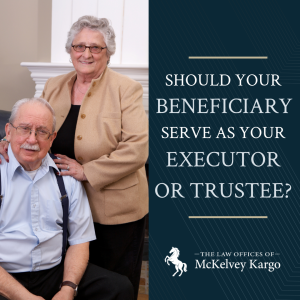 For most people, choosing an executor or trustee means choosing someone close to them – a family member or a friend. However, this often means their executor or trustee is also a beneficiary. But, will choosing a beneficiary create a conflict of interest?
 It can be tempting to avoid costs of creating an estate plan when your only significant asset is your home. After all, what’s the harm of simply
 If you already own a business or are considering starting one soon, you are likely exploring strategies to ensure your venture can maintain profitability and staying power. As one of your most valuable assets, any successful proprietorship will require a significant investment of both time and money. A comprehensive business plan is imperative when forming an entity that fosters rapid growth and protects against losses and threats, including lawsuits, termination, tax minimization, and challenging partners and employees. Selecting a suitable business entity is a key component in building a solid foundation.
 Wealth transfer is not merely the movement of financial assets from one generation to the next; it’s a process that involves the delicate balance of preserving family values, fostering financial responsibility, and ensuring a lasting legacy. As families embark on the journey of estate planning, the integration of values becomes a crucial aspect of passing on wealth beyond monetary considerations.
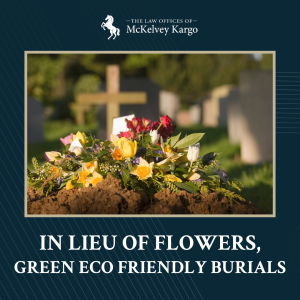 When reading obituaries, you may start noticing a trend. The line “In lieu of flowers, please…” is becoming more prevalent, with families instead asking for a donation to a particular organization that was meaningful to the deceased. As environmental awareness grows, many individuals are seeking ways to align their end-of-life plans with their commitment to sustainability. Green burials and eco-friendly estate planning offer meaningful options for reducing the environmental impact of traditional burial practices.
 Cultural beliefs and traditions play a significant role in shaping estate planning decisions. Different cultures have unique perspectives on inheritance, family roles, and wealth distribution, which can greatly influence how an estate plan is structured. For instance, some cultures prioritize passing wealth along the male lineage, while others may emphasize equal distribution among all children. Some cultures prioritize keeping land in the family over anything else.
 Life insurance plays a crucial role in estate planning, offering a financial safety net that ensures loved ones are protected against unforeseen events. One of the primary uses of life insurance is to cover funeral expenses, which can be a significant financial burden. The average cost of a funeral can range from $7,000 to $12,000, and life insurance can provide immediate funds to cover these costs, ensuring that family members are not left scrambling to pay these expenses during a time of grief.

 In the hustle and bustle of our youthful years, contemplating estate planning may seem like a task meant for a far-off future. Yet, the importance of having crucial documents in place cannot be overstated, even for those under the age of 40. Particularly, health care directives and powers of attorney are not just for the older generation; they are essential tools for safeguarding our well-being and financial affairs, especially as we embark on new life chapters.
 Are You Prepared for the New Business Reporting Requirements?
 In our increasingly digital world, we leave behind a substantial footprint of online assets and digital legacies. From social media accounts to email subscriptions, these digital assets hold both sentimental and financial value. However, many individuals overlook the importance of incorporating these assets into their estate plan.
 Estate planning is a difficult topic to broach no matter what, but conversations can also make things much easier for your loved ones and limit the possibility of disputes in the future by holding these conversations in advance.
 There’s Still Time: End-of-Year Tax Planning Considerations